My first spring garden was a disaster. I planted trays of tender annuals in early March because the sun felt warm on my face, and then a frost rolled through and turned everything to mush. I learned the hard way that the best flowers to plant in spring are not the ones you rush. This guide is the plan I wish someone had handed me back then: when to start, how to get the soil right, ten forgiving flowers with planting depth and spacing, and what to do after they go in. If you are a beginner, that is genuinely all you need.
When to Start Planting Spring Flowers
Timing is the difference between a garden that fills out and a garden you have to replant. The single most useful tool is your local last frost date. Everything else hangs off it.
Cool-season flowers such as pansies, violas, calendula and sweet peas can go into the ground two to four weeks before that last frost date. They tolerate a light chill and actually perform better in cool soil. Tender flowers such as zinnias, marigolds, cosmos and sunflowers need to wait until the soil has warmed and the frost risk has passed, usually one to two weeks after the last frost date.
How do you know the soil is ready? A simple test: push your finger in about two inches. If it feels cold and sticky, wait another week. If it crumbles and feels slightly warm, you are good to go. You can also check that nights are staying above about 5°C for the cool-season group, and above 10°C for the tender group.
Seed-starting indoors changes the calendar a little. Most annuals want six to eight weeks indoors before transplanting, so count backwards from your last frost date. If you missed that window, don’t panic. Direct sowing works fine for the ten flowers below, and garden centres sell sturdy transplants well into late spring.
One last thing about timing: succession sowing. Instead of planting all your seeds on one day, sow a small batch every two to three weeks through spring. You get a longer flowering season and a safety net if a cold snap catches one batch.
Soil and Tools: The Boring Bits That Actually Matter
Most spring planting failures are soil problems in disguise. Get this part right and the flowers do the rest.
Start by clearing weeds and any leftover winter debris. Then loosen the top six to eight inches of soil with a fork or hand trowel. You do not need to dig deep or turn the whole bed over; you just want roots to move easily.
Next, work in organic matter. Compost is the simplest option. Spread a two to three inch layer over the surface and mix it into the top few inches. This improves drainage in heavy clay and helps sandy soil hold moisture. If your soil is very heavy, a handful of grit or coarse sand mixed in helps a lot.
Check the pH if you can. Most flowering annuals are happy between 6.0 and 7.0. A cheap test kit tells you whether you need to adjust, and it saves you guessing for the rest of the season.
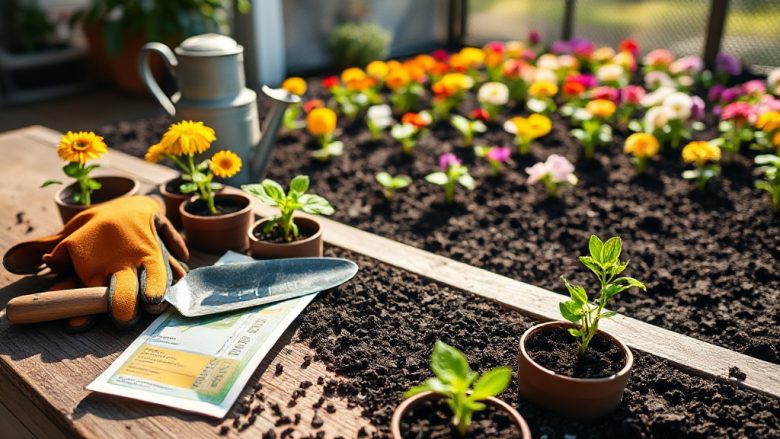
Your tool list is short: a hand trowel, a hand fork, a watering can with a rose head, a kneeling pad, and a pair of gloves. A soil thermometer is a nice extra if you want to be precise about when to sow. Labels help more than you think, especially with direct-sown seed.
Water the bed thoroughly the day before planting, not the day of. That way the soil is moist but not muddy, and you are not trying to plant into a puddle.
The 10 Best Flowers to Plant in Spring
These ten are chosen for one reason: they forgive beginners. All of them can be direct sown or planted as transplants in spring, and none of them need special treatment.
| Flower | When to Plant | Sowing Depth | Spacing |
|---|---|---|---|
| Calendula | 2–4 weeks before last frost | 1/4 inch | 10–12 inches |
| Sweet pea | 2–4 weeks before last frost | 1 inch | 6–8 inches |
| Pansy | 2–4 weeks before last frost | Surface, barely covered | 6–8 inches |
| Cornflower | 2–4 weeks before last frost | 1/4 inch | 8–12 inches |
| Nigella | 2–4 weeks before last frost | 1/8 inch | 6–8 inches |
| Sunflower | After last frost | 1 inch | 12–18 inches |
| Marigold | After last frost | 1/4 inch | 8–10 inches |
| Zinnia | After last frost | 1/4 inch | 9–12 inches |
| Cosmos | After last frost | 1/4 inch | 12–18 inches |
| Nasturtium | After last frost | 1 inch | 10–12 inches |
A quick word on each, because the numbers only tell half the story.
Calendula is the workhorse of a beginner garden. It flowers for months, self-seeds if you let it, and the petals are edible. Sweet peas need a trellis or netting, but the scent is worth the trouble. Soak the seeds overnight before sowing to speed up germination. Pansies shrug off cold and give you colour when nothing else will. Cornflowers are almost too easy. Scatter them and they come up. Nigella, also called love-in-a-mist, has delicate flowers and unusual seed pods that dry beautifully.
Sunflowers are the crowd-pleaser, and children love them. Choose a shorter variety if you have a windy spot. Marigolds are reliable, pest-resistant and cheerful, and they work well in pots. Zinnias give you the most colour per square foot of any annual I have grown, but they hate cold soil, so wait. Cosmos is tall, airy and generous with flowers, and it thrives on poor soil. Nasturtiums trail nicely over edges and the leaves and flowers are both edible.
If you want a single starting point, plant calendula and zinnias. One for the cool weeks, one for the warm ones. That pairing covers most of spring.
Aftercare: Watering, Feeding and Keeping Them Going
Planting is the easy part. The next six weeks decide how your garden looks.
Water deeply but less often. A good soak twice a week beats a light sprinkle every day, because it pushes roots downward. Water in the morning if you can, and aim at the soil rather than the leaves to reduce disease.
Feed lightly. A balanced liquid feed every two to three weeks is plenty for most annuals. If your soil has plenty of compost, you may not need much at all. Overfeeding gives you leaves instead of flowers, which is a common beginner mistake.
Deadhead regularly. This means pinching or snipping off spent flowers so the plant keeps producing new ones instead of setting seed. For zinnias, cosmos and calendula, this single habit can double your flowering period.
Thin your seedlings. It feels brutal, but crowded seedlings compete for water and light and end up weak. Once they have two sets of true leaves, pull the extras so the remaining plants sit at the spacing in the table above.
Mulch with a thin layer of compost or bark to hold moisture and keep weeds down. Keep it away from the stems so they do not rot.
Watch for slugs in damp springs. A nightly check with a torch is oddly effective, and a ring of crushed eggshell or grit around young plants helps. Support tall growers like sunflowers and cosmos with a stake early, before they need it.
And if something goes wrong, that is normal. A patch that fails is information, not failure. Note what happened, adjust next spring, and plant a little more of whatever worked.
Spring gardening is mostly about patience and paying attention. Start with the timing, get the soil roughly right, plant a handful of forgiving flowers, and keep them watered and picked. That is the whole method. The best flowers to plant in spring are the ones that suit your garden and your schedule, and for a beginner, that usually means the easy ten above. Plant a little, learn a lot, and next year you will start earlier and worry less.